Some restaurant memories begin with an extraordinary meal. A diner memory might begin with something much smaller: the seat you always wanted, the sound of a cup meeting its saucer, or the person sitting across from you. The food matters, but so does the feeling of knowing where you are.
Counter or booth?
Those two choices made different kinds of visits. A counter stool put you close to the small workings of the place. A booth made a temporary room of your own, with enough space for a family conversation, a folded newspaper, or an argument over what to order.
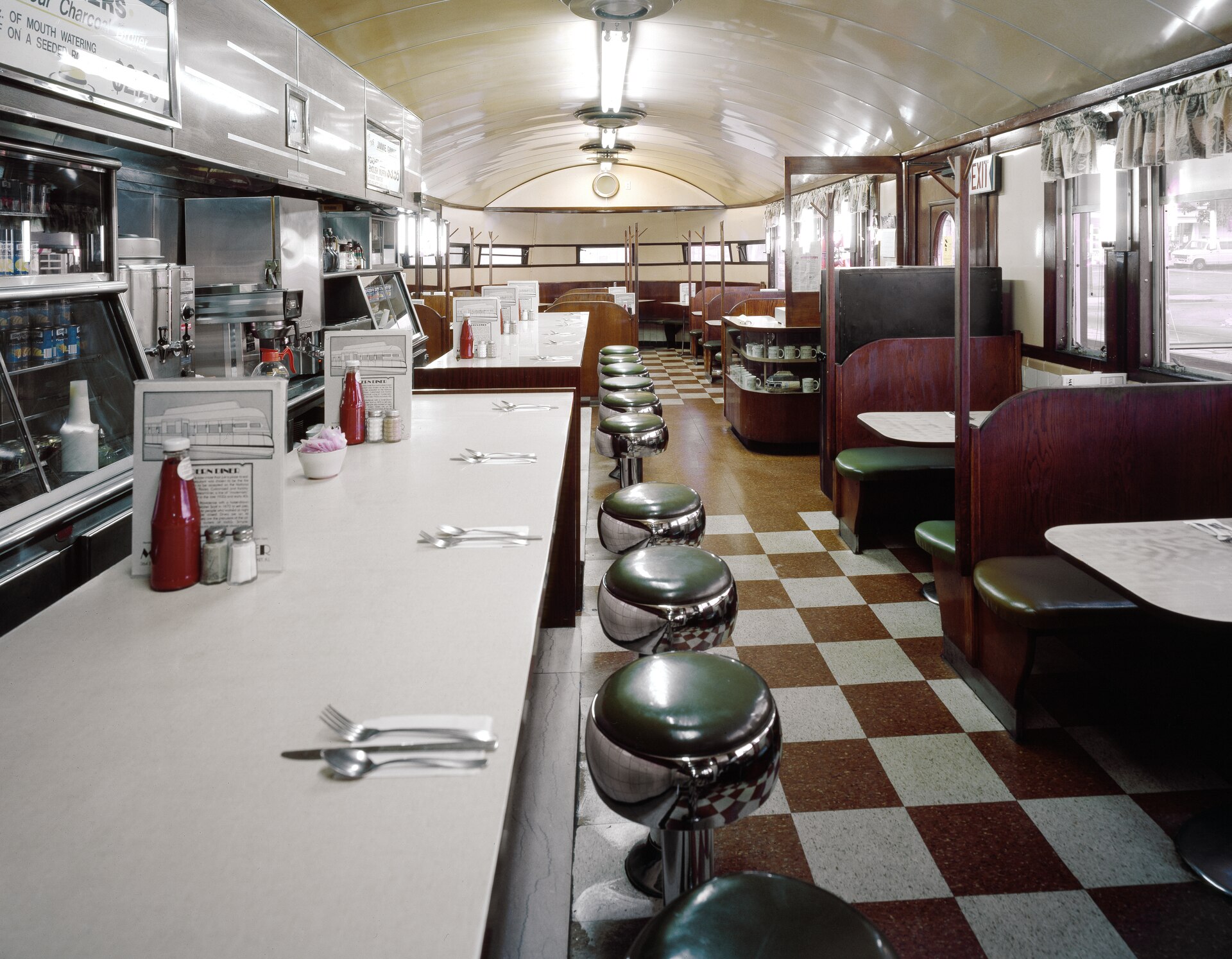
Look at Carol M. Highsmith’s photograph of the Modern Diner in Pawtucket. The green stools line up along the counter; wooden booths sit across the checkerboard floor. The Library of Congress archive dates the picture broadly, between 1980 and 2006. Its appeal does not depend on pinning it to a particular year. It is the arrangement of an inviting, usable room.
The visits that did not need an occasion
A birthday dinner has a reason to be remembered. Breakfast after an errand does not always get that privilege. Yet the less remarkable visits can become the ones you want back: an unhurried stop with a parent, a meal after a long shift, a conversation that continued after the plates were cleared.
A familiar menu also removes a few decisions. You can spend less time choosing and more time being there. An order may become attached to a person so firmly that seeing it years later brings them to mind.
The details a menu cannot list
A familiar place is built from details that rarely make it into an advertisement. The view from one particular window. The shape of a water glass. The way a table catches the afternoon light. You might struggle to describe the room from memory, then recognize it immediately in a photograph. Recognition arrives before the explanation.
A diner can also become a marker in a family calendar. There is the breakfast before a long drive, the meal after a graduation, or the stop that somehow became a tradition without anyone declaring one. The visits accumulate quietly. Later, looking at the menu can feel like looking through an album whose photographs are missing: you know who would order what, who would offer to share, and who would insist they were not hungry before reaching across the table for a bite.
A small place in a larger life
Of course, no diner stands for everyone’s childhood. Some people remember a lunch counter, a neighborhood café, or the family kitchen instead. The shared thread is an ordinary place made meaningful through repetition. Go often enough, with people who matter, and even an unremarkable table can become part of your personal map.
Was your family a counter family or a booth family?
Sources & further reading
Written with AI assistance. Historical details checked against the linked sources. Our editorial approach
Keep a little yesterday close