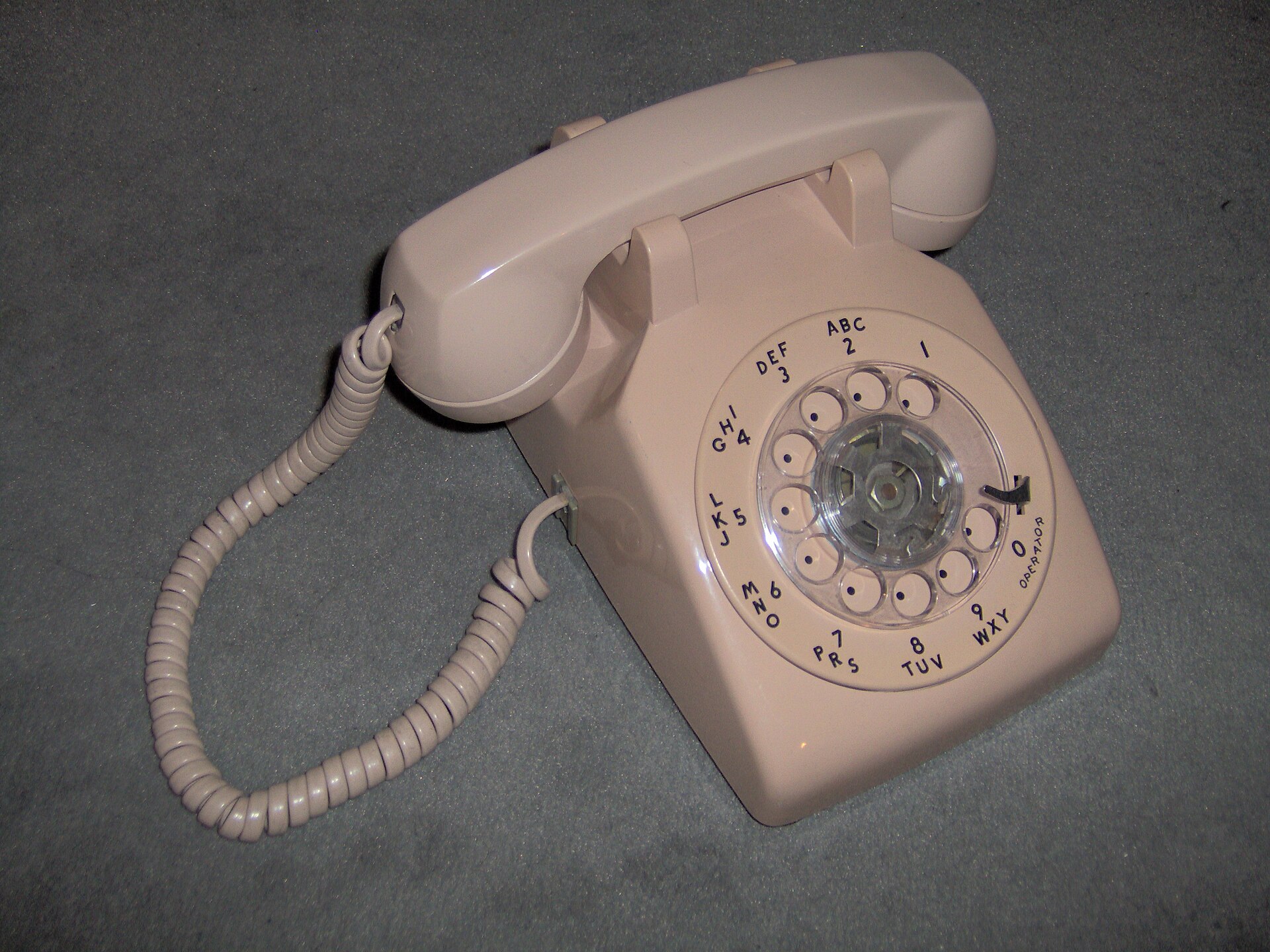


Picture the phone in a house you knew growing up. Not the number, and not the person on the other end. Picture the spot where it sat. A kitchen counter beside a stack of papers? A little table in the hall? For anyone who shared a household telephone, that one object can bring an entire room into focus.
A call became a household event
A shared phone asked a simple question whenever it rang: who was this one for? Someone answered, someone called a name, and someone else might have to stop what they were doing. Before the conversation even began, there was a small exchange between the people at home.
There could be a pencil nearby for taking messages and a scrap of paper that was never quite large enough. The message might be carefully written, or reduced to a name and a number with the assumption that the intended person would understand.
Privacy had a physical limit
If the handset was attached by a cord, moving somewhere quieter took planning. A doorway could become a refuge. A chair could be turned away from the room. The conversation was personal, but the phone still belonged to the house.
A rotary dial added its own rhythm. Each number required a small movement and a pause while the dial returned. The Western Electric Model 500 shown here makes that familiar mechanism easy to see. Telephone collections now preserve such everyday objects alongside other chapters in the history of communication.
Knowing a number without looking
A frequently dialed number could settle into memory through repetition. The hand learned a pattern as well as the mind learning the digits. An address book kept less familiar numbers nearby, sometimes with crossed-out entries and extra names squeezed into the margins. Each page recorded a household’s connections in a surprisingly compact form: relatives, neighbors, the repair shop, somebody from school.
A call could interrupt dinner or arrive just as everyone was leaving. That timing became part of the experience, because being reachable often depended on being in the right place. There was anticipation in waiting for the ring, and disappointment when it belonged to someone else. Nobody needs to romanticize a missed important call to remember how much emotional weight an ordinary sound could carry. The telephone made distant people present, but it also reminded you of everyone standing close enough to overhear.
Remembering the room around it
For some people, a landline recalls inconvenience: waiting for a call, missing someone, or being interrupted. For others, it brings back the sound of a familiar voice calling them to the receiver. Both memories can sit together. The phone was useful, occasionally frustrating, and so ordinary that nobody needed to photograph it. Perhaps that is why seeing one again makes the surrounding room feel unusually vivid.
Where did the telephone live in your childhood home?
Sources & further reading
Written with AI assistance. Historical details checked against the linked sources. Our editorial approach
Keep a little yesterday close