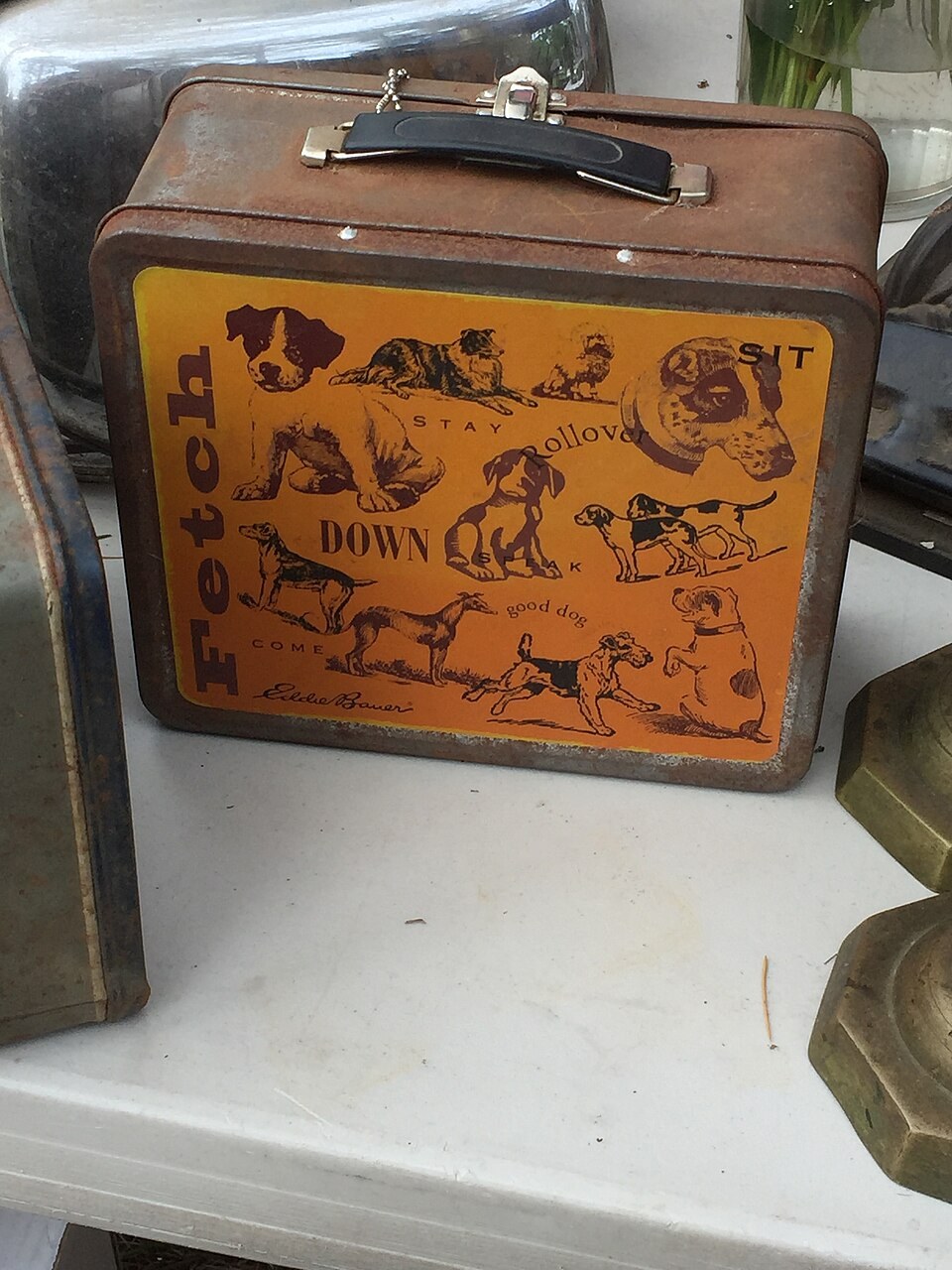

Before anyone saw what you brought for lunch, they saw the box. A bright picture, a familiar character, a handle just large enough for a small hand: the lunchbox announced an interest you carried into school each morning. It was practical equipment, but choosing one could feel like an unusually important decision.
A favorite character came along
The Smithsonian preserves a steel Hopalong Cassidy lunchbox made by Aladdin Industries in 1950. Its collection description identifies it as the first lunchbox to carry a licensed image. That object helps explain the appeal of the format: something needed for an ordinary school day could also belong to the world of entertainment.
For a child, the connection was immediate. You did not need to know anything about licensing to want a picture of a favorite character beside you at lunch. Choosing the box was a small declaration of taste. Choosing differently from a friend could start a conversation before either lid was opened.
The small routine inside
Opening the latch revealed a much more personal arrangement. A sandwich wrapped a certain way, something saved for last, perhaps a container that needed careful handling. The outside might look like another child’s box, but the contents reflected the person who packed it and the habits of the home it came from.
The box developed a history through use. A scuffed corner showed where it had landed. A mark on the bottom helped distinguish it from a similar one. A dent could outlast the explanation of how it happened. Unlike a picture on a screen, the favorite image traveled through real weather, crowded shelves, and the daily business of being carried.
An object caught between school and home
At the end of the day, the lunchbox came back. It might contain an uneaten item, a forgotten wrapper, or nothing at all. Someone opened it again, cleaned it, and prepared it for another morning. That repeated journey made the object part of two different places: the household where the day began and the school where much of it happened.
Not every childhood included a metal lunchbox. Paper bags, plastic containers, and school meals have their own memories. The point is not that one version was better. It is that a familiar everyday object could carry more than food. Years later, the right picture or the sound of a latch may recall a classroom, a friend, or the person who made lunch.
A collector may look for condition and rarity. Memory often does the opposite. It looks for the worn handle, the particular scratch, or the character nobody else in the family cared about quite as much. Those details turn a mass-produced box into the one that belonged to you.
Which picture was on the lunchbox you remember best?
Sources & further reading
Written with AI assistance. Historical details checked against the linked sources. Our editorial approach
Keep a little yesterday close