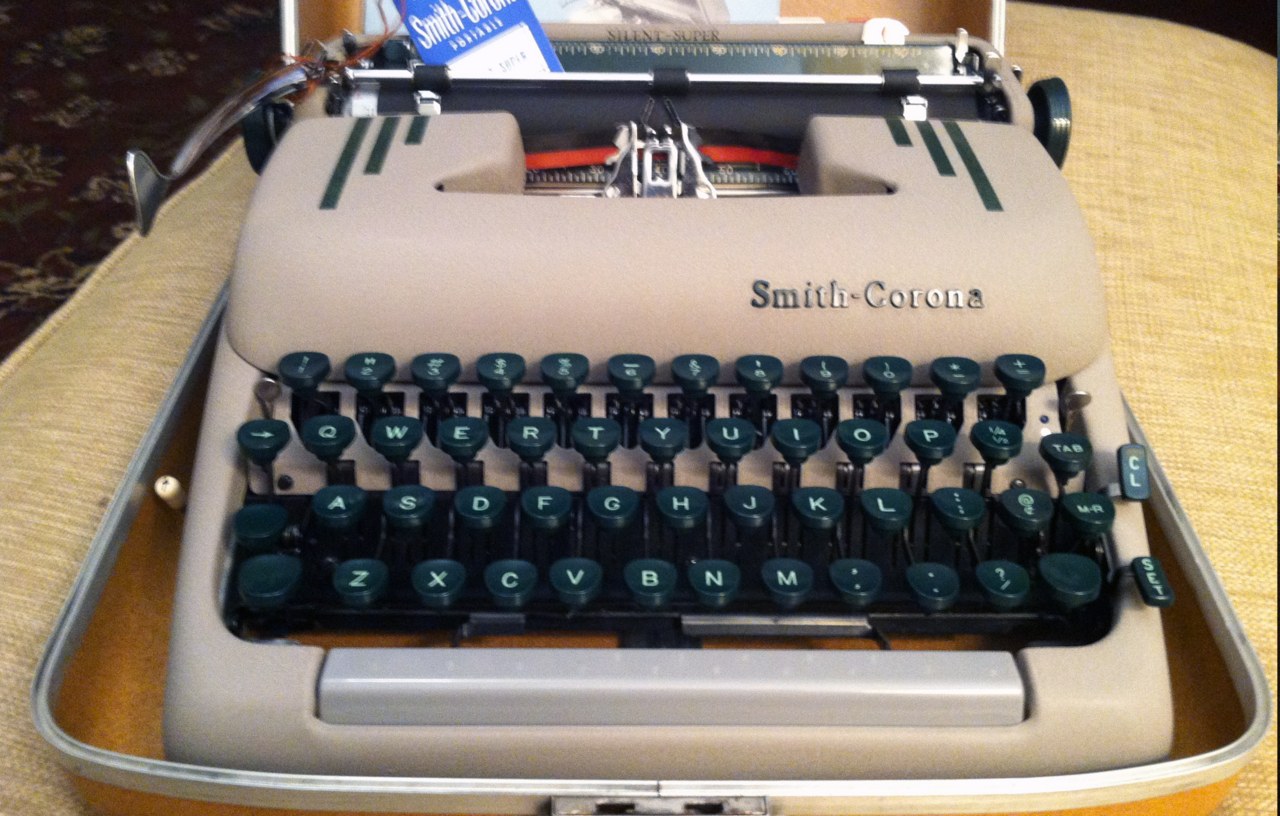

A typewriter made work audible. Each key announced an action, and a line advanced across real paper while you watched. There was no need to open a file to see what had been accomplished. The page itself held the evidence, including the places where confidence, hesitation, or a mistake had changed the rhythm.
A machine on the desk
The Smithsonian dates Remington’s commercially successful Sholes and Glidden Type Writer to 1874. That early model produced capital letters; a later model offered both upper and lower case. The machines remembered from twentieth-century offices and homes came from a long development of the basic idea: turn individual key presses into a printed page.
Preparing the paper was part of beginning. Feed it in, turn the roller, make sure the top edge looked right. The machine asked for a few physical decisions before the first sentence. A fresh sheet could feel inviting or intimidating, depending on how well you knew what you wanted to say.
A mistake occupied real space
Typing encouraged attention to the next word because revising was not as effortless as it would become on a computer. A correction left a task to perform. You could stop immediately, continue and fix it later, or decide that the page deserved another attempt. Each choice interrupted the movement in a slightly different way.
That does not mean everyone composed more carefully or produced better writing. It means the tools made certain parts of the process visible. A discarded page represented time already spent. A clean copy could feel satisfying because the route toward it had involved a sequence of decisions that remained close at hand.
The page could leave the machine
When the writing was finished, the paper came free. It could be signed, folded, mailed, passed to somebody else, or placed in a folder. The final object did not depend on the machine to be read. That physical independence gave a letter or assignment a clear transition from work in progress to something ready to deliver.
For many people, a typewriter is also connected with someone else’s concentration. A parent at a desk, a school office, a relative composing correspondence. The sound might have meant that work was happening and interruptions should wait. Even a person who never learned to type could recognize the pace of someone who used the machine often.
A modern keyboard preserves part of the arrangement while changing almost everything about revision and storage. The older machine remains memorable because its actions were so closely linked to what you could see and hear. A key moved, a mark appeared, and a sheet slowly filled. The sound of progress came directly from the act of making it.
Whose typing would you recognize from the next room?
Sources & further reading
Written with AI assistance. Historical details checked against the linked sources. Our editorial approach
Keep a little yesterday close